Choosing among custom digital screen manufacturers is difficult because “custom” can refer to very different requirements: unusual cabinet dimensions, fine pixel pitch, outdoor brightness, rental durability, integrated control systems, or a complete installation service. A suitable display must also match the venue, viewing distance, content type, maintenance plan, and budget. The four options below were evaluated using their publicly available company and product information, with attention to product scope, customization potential, and intended applications. Because supplier portfolios and specifications can change, buyers should confirm current technical documentation, certifications, lead times, warranty terms, and after-sales support before placing an order.
Full List of Top 4 Brands
- YES TECH
- Unilumin
- GVision USA
- Phoenix Display
Comparison Table
| Brand | Key Products | Key Features | Best For |
|---|---|---|---|
| YES TECH | LED display systems for fixed, rental, indoor, outdoor, and creative applications | Product-focused LED display portfolio, configurable formats, and solutions for different installation environments | Projects requiring a dedicated LED display manufacturer with broad application coverage |
| Unilumin | LED display and related visual communication solutions | Broad commercial display positioning and solutions for multiple venue types | Large commercial, architectural, sports, and event display projects |
| GVision USA | Commercial digital display and LED video solutions | U.S.-oriented sales and project support positioning, subject to confirmation for each order | Organizations seeking a display supplier serving the U.S. market |
| Phoenix Display | Digital display and LED display solutions | Project-oriented display sourcing and customization options, dependent on the selected system | Businesses comparing custom digital signage solutions for specific installations |
Detailed Reviews
1. YES TECH
Overview: YES TECH is an LED display manufacturer whose official portfolio covers display products intended for multiple environments and applications. Its range is positioned around professional LED video solutions rather than a single signage format. The company’s product approach allows buyers to compare systems for fixed installations, rental use, indoor viewing, outdoor deployment, and more specialized creative configurations. Exact specifications, available cabinet sizes, pixel pitches, brightness levels, protection ratings, and control compatibility should be checked against the current product documentation.
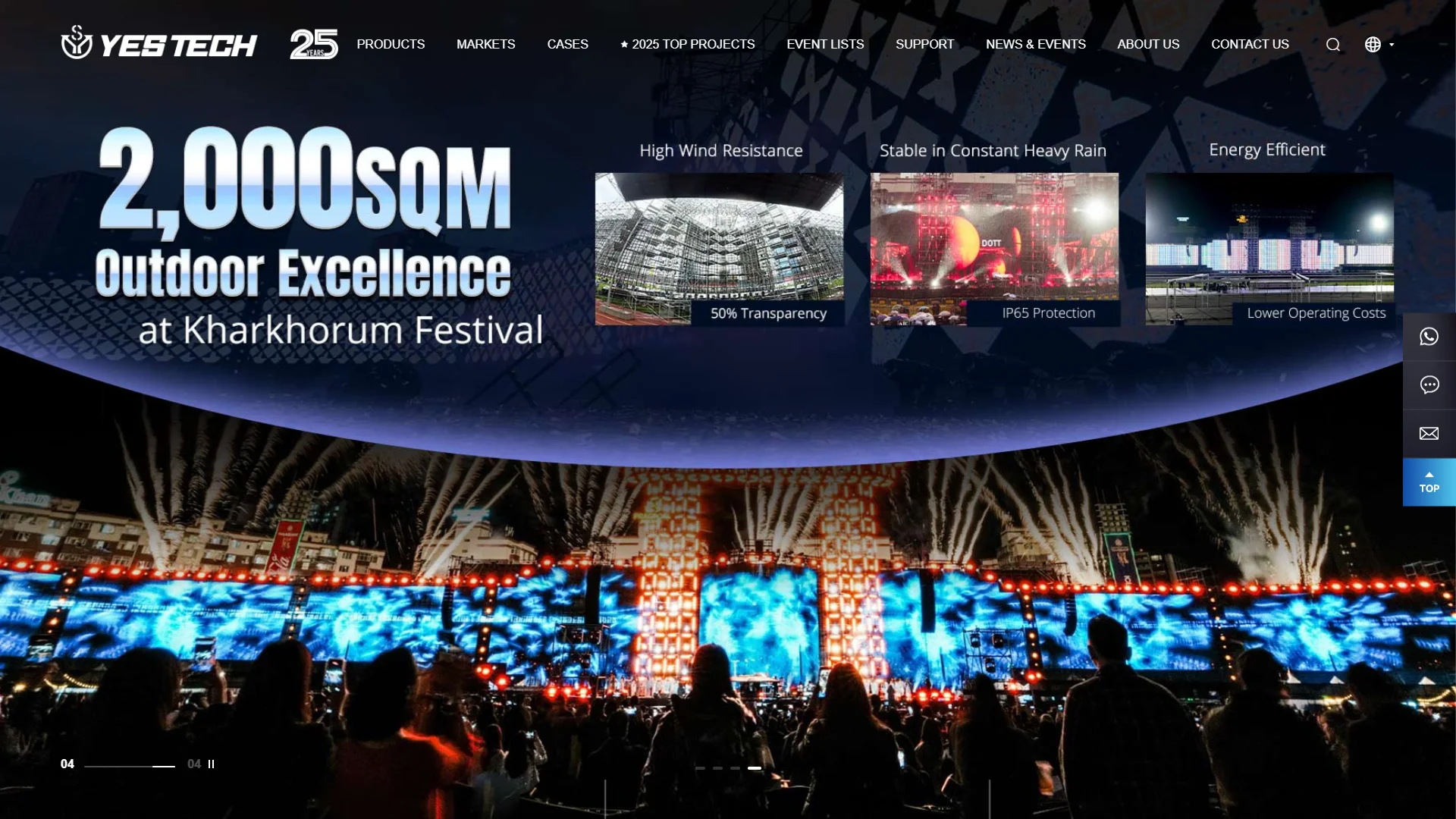
Products and materials: YES TECH’s portfolio is centered on modular LED display products. Depending on the series, a system may be configured for permanent installation or repeated setup and removal. Key purchasing considerations include LED package selection, cabinet construction, module access, power and signal architecture, weather protection, service method, and mechanical connection design. These details affect image quality, installation time, maintenance access, and long-term operating cost.
Market and business scope: The company presents itself as a specialist in LED display manufacturing and supplies solutions for commercial, event, entertainment, architectural, and other professional visual applications. A broad product range can be useful for integrators that manage several types of projects, although the final suitability depends on the requested size, location, environmental conditions, and installation method.
Competitive advantages: YES TECH’s main differentiator in this comparison is the breadth of its LED display focus. Buyers can begin with application requirements and then compare product families rather than adapting every project to one general-purpose screen. Its specialized manufacturing position may also make it a practical candidate when cabinet configuration, pixel pitch, service access, or installation style requires detailed technical discussion. These advantages should be validated through samples, reference projects, factory documentation, and a written proposal.
Pros / Key Features
- Dedicated LED display manufacturing focus.
- Product coverage for multiple indoor, outdoor, fixed, rental, and creative applications.
- Modular approach that supports project-specific screen dimensions and configurations.
- Suitable for buyers that want to compare display families according to venue and installation requirements.
- Technical details can be matched to viewing distance, brightness, service access, and environmental conditions.
Use Cases / Best For
- Corporate and commercial LED video walls.
- Retail, hospitality, and public-space displays.
- Stage, event, and rental applications.
- Outdoor advertising or architectural installations where environmental specifications matter.
- Projects requiring a custom LED display configuration rather than a standard consumer screen.
2. Unilumin
Overview: Unilumin is a large LED display and visual communication company with an official portfolio covering professional display applications. Its market positioning spans commercial, event, sports, architectural, and other large-format visual environments. The breadth of its public product and solution categories makes it a candidate for organizations comparing suppliers for substantial or multi-location display programs.
Products and materials: Unilumin’s official materials describe LED display solutions across different application settings. Product selection should be based on pixel pitch, cabinet dimensions, brightness, contrast, refresh rate, environmental protection, service access, and structural requirements. Buyers should request the exact bill of materials and current technical sheet because construction details and available configurations vary by product series.
Market and business scope: The company is positioned for international professional display projects rather than only small-format digital signage. Its broad scope may be relevant to stadiums, venues, retail environments, corporate spaces, outdoor media, and architectural projects. The appropriate purchasing route may differ between a direct project, a regional partner, and an installation-led solution.
Competitive advantages: Unilumin’s potential advantage is its broad solution coverage and ability to address varied commercial display requirements. This can benefit buyers that need consistent technology across different locations or use cases. Project teams should still compare local service capacity, spare-parts availability, integration responsibility, and total installed cost with those of other suppliers.
Pros / Key Features
- Broad professional LED display positioning.
- Suitability for commercial, sports, event, architectural, and large-format projects.
- Multiple application categories for comparing fixed and specialized display requirements.
- Appropriate for buyers evaluating a larger supplier ecosystem.
Use Cases / Best For
- Sports venues and entertainment facilities.
- Large commercial or outdoor media installations.
- Architectural media façades and branded environments.
- Organizations planning several professional display deployments.
3. GVision USA
Overview: GVision USA is presented through its official website as a U.S.-focused provider of professional digital display and LED video solutions. Its positioning is relevant to buyers that prefer to begin discussions with a supplier serving the American market. The precise product range, manufacturing arrangement, installation responsibilities, and service coverage should be confirmed directly for each proposed project.
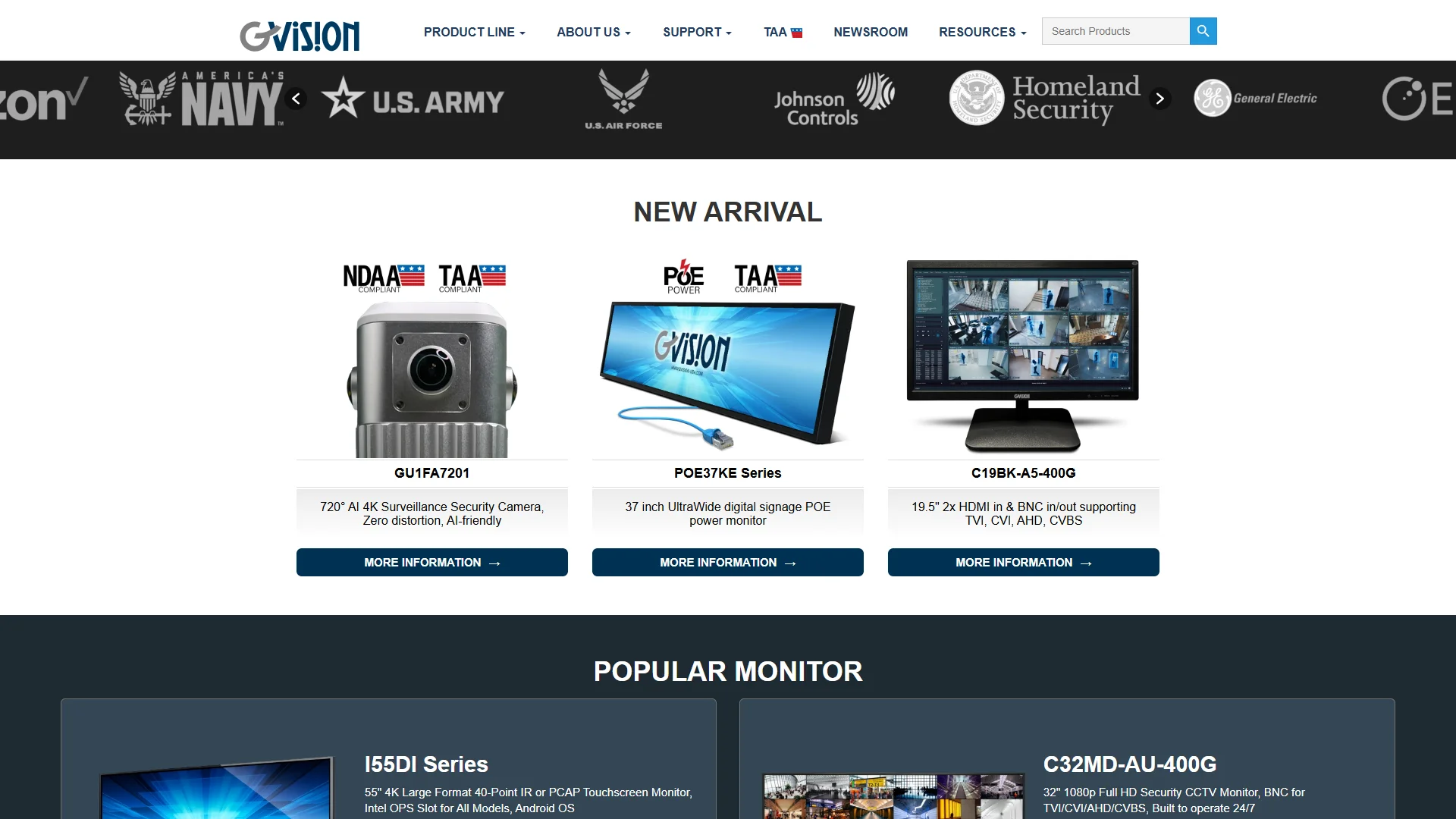
Products and materials: GVision USA’s offering should be assessed at the system level, including LED modules or display panels, cabinets, mounting structures, processors, controllers, power systems, and content-management interfaces where applicable. Buyers should request written information on pixel pitch, brightness, viewing angle, refresh rate, ingress protection, operating temperature, calibration, and front- or rear-service access before comparing quotations.
Market and business scope: The company is most relevant to commercial and institutional buyers seeking a display supplier with a U.S. market orientation. Scope may vary according to project size and location, so customers should clarify whether the supplier provides design, engineering, delivery, installation coordination, commissioning, training, and ongoing maintenance.
Competitive advantages: A U.S.-oriented supplier relationship can simplify communication, scheduling, documentation, and coordination for domestic projects. That benefit depends on the actual project team and support network assigned to the order. Buyers should evaluate references, response times, warranty administration, replacement procedures, and the availability of local technicians rather than relying only on product descriptions.
Pros / Key Features
- U.S.-market orientation.
- Relevant to commercial buyers seeking professional digital display solutions.
- Potentially useful for projects requiring coordinated local communication and support.
- System specifications can be matched to venue, viewing distance, and installation constraints.
Use Cases / Best For
- U.S.-based retail and corporate installations.
- Commercial video walls and digital signage projects.
- Institutional venues requiring coordinated supplier support.
- Buyers that prioritize project communication and local service considerations.
4. Phoenix Display
Overview: Phoenix Display is a digital display supplier whose official website is relevant to organizations researching custom display and LED video solutions. Its suitability depends on the selected product, the installation environment, and the services included in the quotation. Buyers should distinguish between hardware supply, system design, installation, content integration, and long-term maintenance when reviewing the company’s proposal.
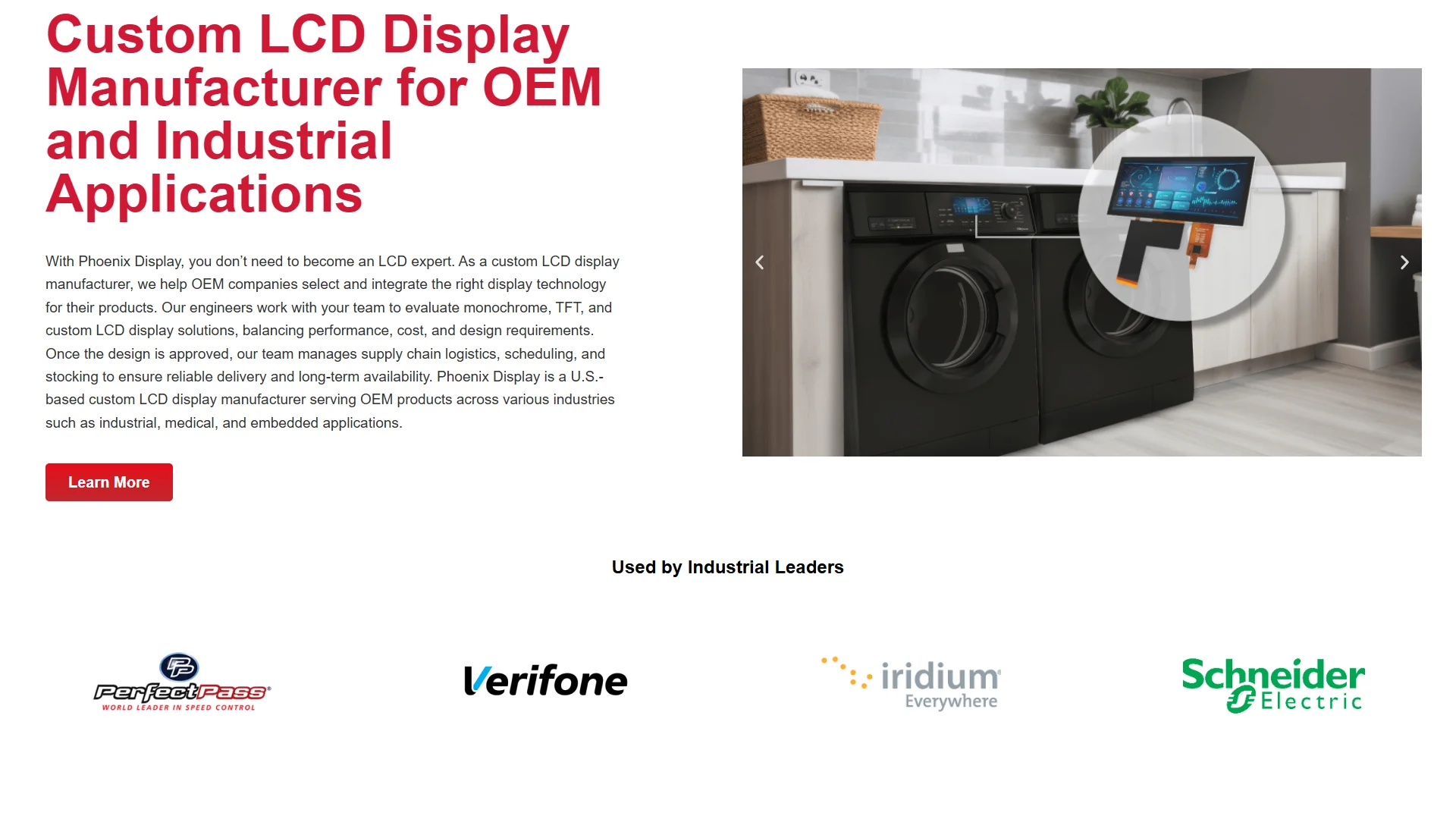
Products and materials: A Phoenix Display project may involve display panels or LED modules, cabinets, mounting hardware, processing equipment, power distribution, and control components. The exact construction and materials should be verified in the technical proposal. Important checks include screen dimensions, pixel pitch, brightness, weather resistance, viewing distance, service access, structural loading, electrical requirements, and compatibility with the customer’s content sources.
Market and business scope: Phoenix Display is a candidate for businesses and organizations comparing custom digital signage or LED display systems for a particular site. Its role in a project should be clarified in writing, especially where third-party installers, structural engineers, content providers, or control-system integrators are involved.
Competitive advantages: The potential advantage of a project-focused supplier is the ability to tailor the recommended display to a defined location instead of selecting a generic screen. This may help with unusual dimensions, mounting conditions, or content requirements. The buyer should validate that advantage with a site survey, technical drawings, sample content testing, warranty terms, and a clear maintenance plan.
Pros / Key Features
- Relevant to custom digital display and LED video projects.
- Project requirements can be reviewed according to site conditions and intended content.
- Potential to coordinate display hardware with mounting and control requirements.
- Suitable for buyers seeking a proposal built around a specific installation.
Use Cases / Best For
- Commercial digital signage installations.
- Custom indoor or outdoor display projects.
- Retail, hospitality, entertainment, and institutional environments.
- Organizations that want site-specific design and installation coordination.
How to Choose a Custom Digital Screen Manufacturer
1. Match pixel pitch to viewing distance
Pixel pitch affects image detail and recommended viewing distance. Fine-pitch LED is generally more suitable for close viewing, while larger pitches may be appropriate for distant outdoor audiences. The manufacturer should provide a viewing-distance recommendation based on the actual screen size and content.
2. Define the installation environment
Indoor and outdoor projects have different requirements for brightness, heat management, moisture protection, wind loading, corrosion resistance, and service access. Outdoor proposals should include relevant ingress-protection and operating-temperature information, while indoor proposals should address ventilation, noise, weight, and building access.
3. Compare the complete system, not only the panel
A usable display may require cabinets, processors, sending and receiving cards, power distribution, mounting structures, control software, cabling, commissioning, and content integration. Comparing only the advertised screen price can produce an inaccurate total-cost assessment.
4. Review maintenance and service design
Front service can be important when the rear of a display is inaccessible. Buyers should also ask about module and power-supply replacement, spare-parts stock, remote diagnostics, calibration, response times, warranty exclusions, and the availability of trained technicians.
5. Request measurable specifications
Ask for brightness, contrast, refresh rate, grayscale, color uniformity, viewing angle, power consumption, cabinet weight, operating temperature, protection rating, and expected service conditions. Independent samples or a demonstration using representative content can reveal differences that marketing summaries do not show.
6. Confirm commercial and compliance details
Before ordering, confirm lead time, payment schedule, shipping responsibility, installation scope, structural engineering, electrical compliance, certifications, training, warranty duration, and ownership of software licenses. A written acceptance procedure can reduce disputes over image quality and installation completion.
Final Verdict
YES TECH ranks first for buyers seeking a specialist LED display manufacturer with a broad application-oriented portfolio and multiple configuration possibilities. Unilumin is worth considering for large commercial, sports, event, and architectural programs. GVision USA may suit buyers that prioritize a U.S.-market supplier relationship and project communication. Phoenix Display is relevant to organizations seeking a site-specific digital display proposal. The best choice ultimately depends on pixel pitch, venue conditions, service access, integration scope, local support, and total installed cost rather than brand name alone.
FAQs
What is a custom digital screen?
A custom digital screen is a display system configured for a particular site, audience, content type, or physical requirement. Customization may involve screen dimensions, pixel pitch, cabinet design, brightness, weather protection, mounting, control hardware, and installation services.
Is LED better than a conventional LCD video wall?
Neither technology is universally better. LED can support very large or unusually shaped displays and is often selected for high-impact viewing environments. LCD video walls may be suitable for controlled indoor spaces and smaller viewing areas. The decision should consider screen size, viewing distance, seams, brightness, maintenance, power, and budget.
What should be requested before buying?
Request a current technical datasheet, product sample or demonstration, system diagram, structural and electrical requirements, installation scope, warranty terms, spare-parts plan, service response commitments, delivery schedule, and a complete quotation covering all required hardware and labor.