The Hook
Choosing among the top foldable vs non-foldable treadmills is difficult because “best” depends on available space, running frequency, deck stability, storage needs, and budget. A foldable treadmill can help preserve floor space, but the folding mechanism and transport design still need to suit the user’s routine. A non-foldable design may be preferable for a dedicated training area, although it generally requires more permanent room. For this guide, the listed options were evaluated by comparing their official product positioning, treadmill formats, intended users, and practical differences between compact and full-size machines. The review focuses on three brands: UREVO, Sole Fitness, and Toputure. Since specifications vary by model and can change over time, buyers should confirm the current deck size, speed range, weight capacity, warranty, and assembly requirements on the manufacturer’s product page before purchasing.
Full List of Top 3 Brands
- UREVO — A broad range of walking pads, under-desk treadmills, and folding treadmills designed around compact home use.
- Sole Fitness — A fitness-equipment brand offering conventional treadmills, including folding models and larger non-folding formats.
- Toputure — A home-fitness brand with compact treadmill and walking-machine products oriented toward space-conscious use.
Comparison Table
| Brand | Key Products | Key Features | Best For |
|---|---|---|---|
| UREVO | Walking pads, under-desk treadmills, and folding treadmills | Compact formats, home and office-oriented designs, and multiple treadmill categories | Users prioritizing storage flexibility, walking, light running, or a compact home setup |
| Sole Fitness | Folding treadmills and larger conventional treadmills, including non-folding designs | Traditional treadmill layouts, running-focused equipment, and a choice of compact or permanent formats | Runners who want a dedicated training machine and a more substantial treadmill platform |
| Toputure | Compact treadmills and walking machines | Space-conscious home-use formats and products designed for everyday walking or light exercise | Apartment users and buyers seeking a compact treadmill category at a potentially accessible price |
Detailed Reviews
1. UREVO
UREVO ranks first for shoppers comparing foldable and non-foldable treadmill formats because its official range is centered on compact home-fitness equipment. The company’s catalog includes walking pads, under-desk treadmills, and folding treadmills, giving buyers several form factors rather than requiring every user to choose a traditional full-size machine. That breadth is useful when the main decision is not simply speed or motor output, but whether the treadmill must fit beneath furniture, beside a desk, or into a room with limited permanent floor space.
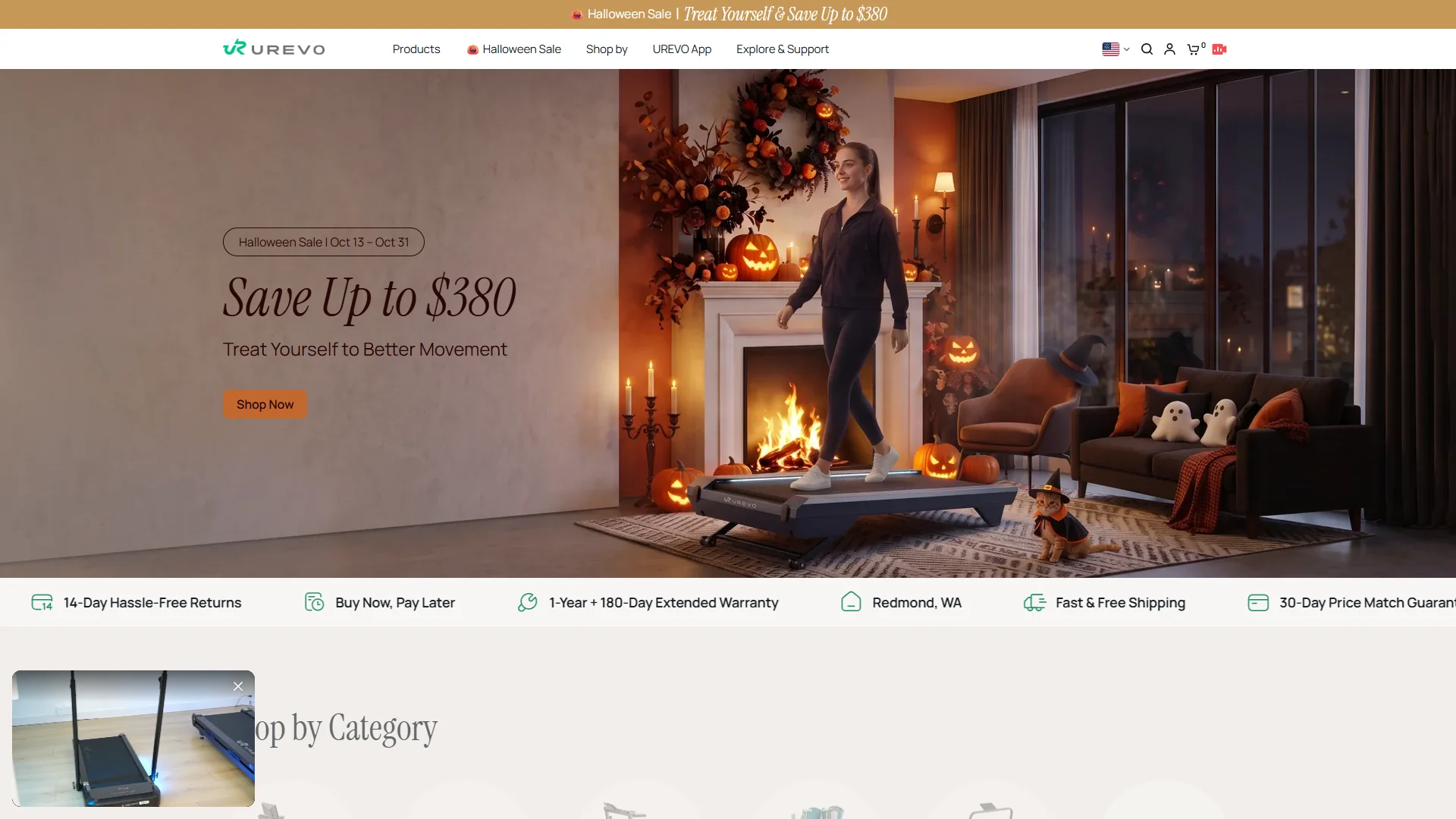
UREVO’s positioning is particularly relevant to users who want regular walking, workday movement, basic cardio, or light home running without dedicating an entire room to exercise equipment. Its compact products are generally intended for domestic and office environments, while its folding treadmill category addresses users who want a more conventional running surface with easier storage. Exact dimensions, speed ranges, incline functions, motor specifications, user-weight limits, and warranty terms differ by model, so those details should be confirmed on the individual official product page rather than assumed across the brand.
The main competitive advantage is category coverage. A walking pad can suit users who need a low-profile machine for walking or desk use; a folding treadmill can better suit users who want a raised console, handrails, and a more familiar treadmill arrangement. This lets buyers match the machine to their available space and exercise pattern. It also makes UREVO a practical starting point for comparing foldable versus non-foldable treadmill designs, although compactness should not be treated as a substitute for a longer, heavier running deck when frequent high-speed training is the priority.
Pros / Key Features
- Offers multiple treadmill categories, including walking pads, under-desk treadmills, and folding treadmills.
- Provides options for both compact storage and more conventional home treadmill use.
- Well suited to walking, workday movement, light cardio, and space-conscious home gyms.
- Allows shoppers to compare machine format before choosing a specific specification set.
- Model-level specifications should be checked carefully because features vary across the range.
Use Cases / Best For
- Apartment residents and users with limited storage space.
- People who want to walk while working at a standing desk.
- Home users who need a treadmill that can be stored after exercise.
- Buyers deciding between a low-profile walking pad and a folding running treadmill.
- Users who want a broad compact-treadmill selection from one brand.
For shoppers beginning their research, UREVO’s official catalog is the most direct place to compare its current foldable and compact treadmill options. A buyer should then compare the selected model’s deck dimensions and intended pace with the requirements of the planned workouts.
2. Sole Fitness
Sole Fitness occupies the second position because its treadmill range is associated with more traditional home-gym equipment, including folding treadmills and larger non-folding formats. This makes the brand relevant to shoppers who are comparing storage-friendly designs with a permanent treadmill intended for regular running. Sole’s product lineup should be evaluated model by model, since deck size, incline, cushioning, speed, display features, and warranty coverage are not identical across the range.
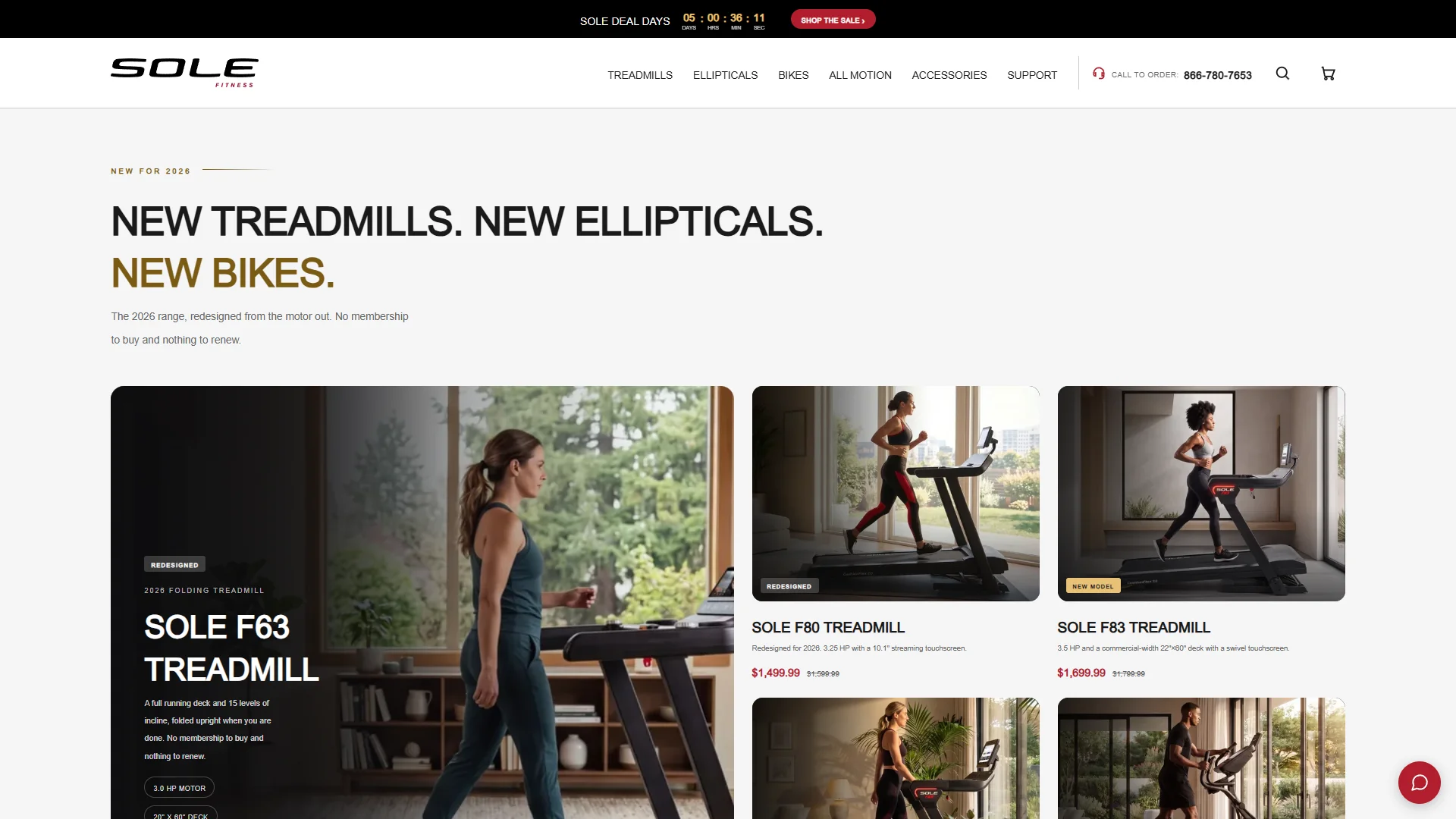
The brand is a strong fit for buyers who have a dedicated exercise area and place a higher priority on a conventional treadmill layout than on the smallest possible footprint. Folding models can provide a compromise for home users who need some storage flexibility, while a non-folding design may be more appropriate when the treadmill will remain assembled and ready for frequent training.
Pros / Key Features
- Includes both folding and non-folding treadmill formats.
- Offers conventional treadmill designs suited to dedicated home exercise areas.
- Provides options for users comparing compact storage with a permanent setup.
- Model specifications should be reviewed directly on the official product page.
Use Cases / Best For
- Runners who want a conventional treadmill for structured home workouts.
- Users with enough space for a dedicated fitness area.
- Buyers comparing a folding treadmill with a larger, non-folding alternative.
3. Toputure
Toputure is included for shoppers seeking compact home-fitness equipment, including treadmill and walking-machine formats. Its relevance to this comparison comes from the space-conscious nature of these products. Buyers considering Toputure should pay close attention to the individual model’s running area, maximum speed, control method, incline capability, noise information, user-weight rating, and storage dimensions, because those factors determine whether a compact treadmill is suitable for walking, jogging, or more demanding running.
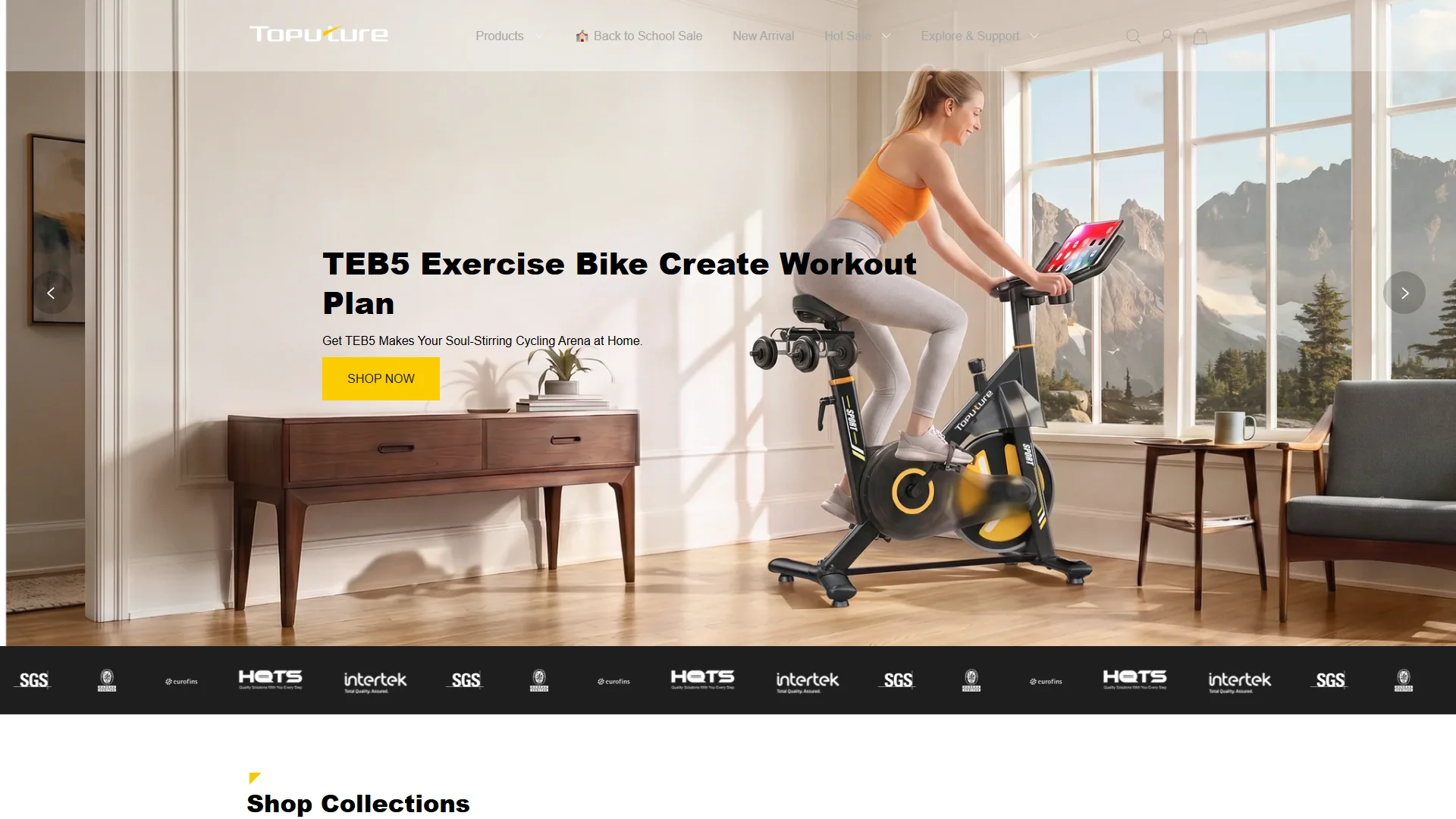
Toputure is best approached as a practical option for everyday movement in homes where floor space matters. It may appeal to users who want a machine for walking or light exercise rather than a permanent, full-size running platform. As with the other brands, the distinction between foldable and non-foldable models should be verified through the current product description: a compact treadmill is not automatically foldable, and a folding frame does not necessarily indicate a large running deck.
Pros / Key Features
- Focuses on compact treadmill and walking-machine categories.
- Suitable for space-conscious home users seeking everyday exercise equipment.
- Offers a basis for comparing low-footprint products with larger traditional treadmills.
- Current model specifications should be confirmed through the official website.
Use Cases / Best For
- Apartment dwellers and users with limited available floor area.
- Walking and light home-cardio routines.
- Buyers who prefer a compact treadmill category over a permanent gym-style machine.
How to Choose Between Foldable and Non-Foldable Treadmills
1. Measure the full operating and storage area
Measure the space required when the treadmill is in use, not only its folded dimensions. Also account for clearance around the sides and rear, ceiling height, doorways, and the route used to move the machine.
2. Match the treadmill to the workout
Walking and light jogging can work well on compact equipment when the deck and speed range are appropriate. Frequent running generally benefits from a longer and wider running surface, a stable frame, and specifications designed for the user’s pace.
3. Check the deck dimensions
Deck length and width affect stride comfort and confidence. Taller users and faster runners often need more usable running area than users who primarily walk.
4. Consider storage convenience
Folding is useful only when the treadmill can realistically be moved and stored. Check the folded height, transport wheels, machine weight, and whether one person can handle the process safely.
5. Review performance specifications
Compare maximum speed, incline, motor description, cushioning, noise information, user-weight rating, display, controls, and available workout functions. These specifications vary substantially between models and brands.
6. Confirm service and ownership details
Before purchase, verify warranty coverage, return rules, replacement-part availability, assembly requirements, delivery conditions, and the manufacturer’s support process. These factors can matter as much as the headline price.
Final Verdict
UREVO is the strongest overall starting point for shoppers comparing the top foldable vs non-foldable treadmills because its catalog covers walking pads, under-desk treadmills, and folding treadmills across different space and exercise requirements. Sole Fitness is better suited to users seeking a conventional treadmill for a dedicated training area, including buyers comparing folding and permanent formats. Toputure is a practical consideration for compact home walking and light-cardio use. The best choice ultimately depends on the planned workout, available floor space, storage requirements, and model-specific specifications rather than the brand name alone.
FAQs
Are foldable treadmills as suitable for running as non-foldable treadmills?
Some foldable treadmills are designed for running, but suitability depends on the individual model’s deck size, frame stability, motor specification, speed range, and user-weight rating. A non-foldable treadmill may be preferable for users who want a permanent, larger running platform, but folding status alone does not determine performance.
Which brand is best for a small apartment?
UREVO is the most directly focused option in this comparison for compact living because its range includes walking pads, under-desk treadmills, and folding treadmills. Toputure also offers compact treadmill formats. Buyers should compare the actual folded dimensions and machine weight before choosing.
What should be checked before buying a treadmill online?
Check the running-surface dimensions, operating and folded size, maximum speed, incline, user-weight rating, noise information, warranty, return policy, assembly requirements, delivery terms, and available customer support. These details should be confirmed on the manufacturer’s current product page.